
Aged care Melbourne

Personal stories and experiences from our Brunswick residents

In this article, four Hope Aged Care residents share their stories and experiences of life at our largest aged care home in Melbourne.

Aged care Melbourne

Bridging the gap: Getting used to life in aged care

Moving into an aged care home is a big deal and can stir up a lot of strong feelings. Many people worry about not being as independent or miss the comfort of their own home. It can feel like a big life change, which might be scary and very personal. 

“By clearly explaining all our services and what we expect, we want to build a clear and trusting relationship from the start.”
Bashar Bitar
Bashar Bitar
Operations Manager at Hope Aged Care
Getting used to a new daily routine and living space, plus the idea of sharing your life closely with others, can be tough.By understanding and sharing these worries, the move to aged care can be a bit easier and more supportive for everyone.

The good news is that many people get through this and end up feeling happy in their new home.” 

Bashar Bitar
Bashar Bitar
Operations Manager at Hope Aged Care

In this article, we’ll hear from four residents of our Brunswick aged care home. They’ll share their own stories about moving in, dealing with these tough feelings, and how they now feel at home. Their experiences show that, even though it might be hard at the start, there’s a friendly and supportive community waiting for you. 
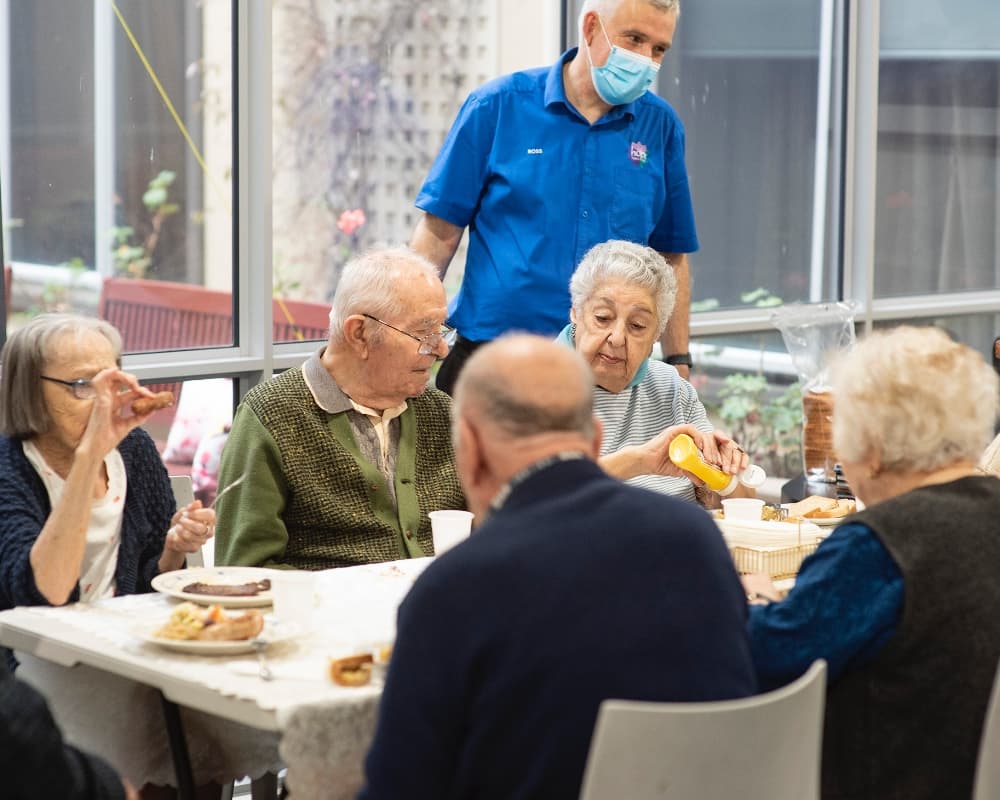
Aged care Melbourne - Brunswick

Emotional transition in Melbourne's aged care

From transition to transformation: Bev's story

When Bev Willan and her husband Jim moved into Hope Aged Care in 2021, it was a significant turning point. Jim needed dedicated care for his Parkinson’s and dementia, and Bev wanted to be by his side. The transition was hard, filled with emotional struggles as Bev faced leaving their lifelong home and adapting to a new environment. 

“It was really hard to make that decision. But seeing how well the staff looked after Jim and getting their support made me realise it was the right move for both of us.” 

Bev Willian
resident at Hope Aged Care Brunswick

After Jim’s passing, Bev embarked on an unexpected journey of self-discovery and renewal within the aged care community. At 81, she found a sense of purpose and joy she hadn’t anticipated, describing this period as the happiest time of her life. 

“Engaging in various activities, contributing to the community here, and building new friendships turned this chapter into the most rewarding one yet. I discovered a new sense of self and a vibrant life here, even at my age.”
Bev Willian
resident at Hope Aged Care Brunswick

At Hope Aged Care, Bev didn’t just join in; she also helped run activities for people with different health problems. This gave her a valuable role in the community and helped her make strong friendships. 

Now, she has a group of friends who are like family. Bev’s experience shows how getting involved and connecting with others in a care home can create a real sense of family and belonging.

Care and community at Melbourne's aged care homes

Sue's insights on genuine care and community

Sue Bebarfald’s arrival at Hope Aged Care was unexpected, a transition directly from hospital to nursing care on her children’s advice. Initially intended as temporary respite, it soon became evident that this was the right place for Sue. Leaving her life in the eastern suburbs of Melbourne for a new chapter in the north was a significant change, but her granddaughter played a crucial role in making this transition smooth and reassuring. 

“I never imagined I’d need nursing care so suddenly, but my granddaughter was a godsend. She found Hope for me, sorted out all the details, and even picked out a lovely, bright room she knew I’d love.” 

Sue Bebarfald
resident at Hope Aged Care Brunswick

Sue had seen many friends in various nursing homes and knew the pitfalls of places that prioritised style over substance. Her experience taught her to value genuine comfort and care, qualities she found at Hope. She shares insights from a lifelong friend involved in aged care advocacy, highlighting the importance of staff quality and training – some of the key values at Hope Aged Care. 

“The care here is different; it’s clear that our comfort and needs are the priority. The staff listen and respond, and that makes all the difference.” 

Sue Bebarfald
resident at Hope Aged Care Brunswick

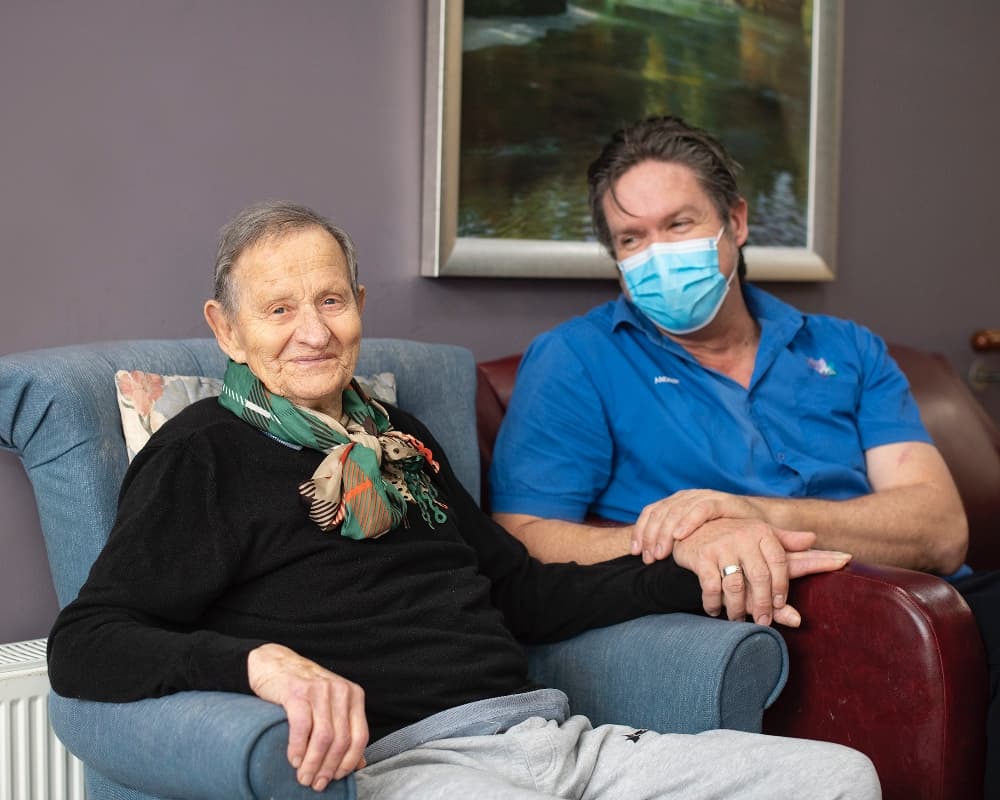
Hope Aged Care has struck a balance that Sue appreciates: large enough to offer a range of services yet intimate enough for personalised attention. She values the flexibility and understanding she receives, from storing her scooter to choosing how and where she wants to dine or participate in activities. 
Aged care Melbourne - Brunswick

Building connections in Melbourne's aged care facilities

Finding family and independence: Raymond's story

Raymond McMillan’s choice to move to Hope Aged Care in 2018 was significant, especially as he had lost touch with his family. Despite this, he found a new sense of belonging and support at Hope that he hadn’t experienced before. The team at Hope was really helpful in getting Raymond back in touch with his family. Thanks to their support, he’s now built a strong relationship with his nephew, who comes to see him often. 

At Hope, Raymond gets the right balance of help and freedom to do things his way, which suits his health and what he likes. This has helped him make new friends and enjoy new things, making his life better.

“The sense of community here is strong. I’ve made great friends among residents and staff, and even visitors from the Community Visitors Scheme. It’s more than a care home; it’s a place where you’re part of a family.” 

Raymond McMillan
resident at Hope Aged Care Brunswick

Raymond thinks so highly of Hope that he suggests others consider it too. His experience shows that Hope is a place where you can rebuild old relationships and create new ones. 

Shared joy at Hope Aged Care Melbourne

Together at Hope: Antonio and June's new chapter

June and Antonio Di Santo chose Hope Aged Care back in 2018 because it felt friendly and welcoming from the moment they arrived. The staff were really nice, saying hello and smiling, which made them feel at home. 

Antonio likes to visit cafes and shops, and since Hope Aged Care Brunswick is near Sydney Rd, they can still go out together.

Even though Antonio has cognitive and speech difficulties, the staff at Hope carefully assessed his needs. They made sure he got a good room in another part of the care home where he gets the right kind of help.

“The staff’s kindness and respect mean so much to us. And the owner’s hands-on approach and commitment to having a registered nurse available at all times give us peace of mind.” 

June Di Santo
resident at Hope Aged Care Brunswick

Antonio and June join in lots of activities at Hope, which keeps Antonio busy and happy, even when June isn’t around. They really appreciate how everyone is treated equally and kindly, no matter where they come from or what difficulties they face. They’ve made some great friends, which has made their stay much nicer and helped Antonio get the care he needs. 

Book a tour at one of our Hope Aged Care facilities

This field is for validation purposes and should be left unchanged.

Brunswick

Do you want to receive news and events updates?(Required)
This field is for validation purposes and should be left unchanged.

Gladstone Park

Do you want to receive news and events updates?(Required)
This field is for validation purposes and should be left unchanged.

Sunshine

Do you want to receive news and events updates?(Required)
This field is for validation purposes and should be left unchanged.

Swan Hill

Do you want to receive news and events updates?(Required)

Entry into Hope Aged Care Homes

If you’re starting to consider residential aged care for your Mum, Dad or loved one you’re probably wondering how much it will cost – and if they can afford it.

The Australian Government’s New Aged Care Act came into effect from 1 November
2025. The reforms include changes to the costs of permanent residential aged
care. These costs apply to every aged care community across Australia.

The following costs apply to those entering residential aged care after 1 November
2025. If you were approved for, or accessing, a Home Care Package on 12
September 2024, you are protected by the ‘no worse off principle’ and will pay
fees under the 1 July 2014 arrangements. 


Fees and contributions you may pay

Before you enter permanent residential care, you should have your means assessed to see if you’re eligible for Australian Government assistance with fees and accommodation costs. The fees you pay will depend on the outcome of your means assessment and what you agree on with your aged care provider.  You may need to pay some or all of these fees:

• basic daily fee

• hotelling contribution

• non-clinical care contribution

• accommodation costs


Basic daily fee

All residents pay this fee for daily living services, including meals, cleaning, laundry and utilities.

The maximum fee is set at 85% of the single basic age pension. This fee increases in March and September each year in line with the age pension.

Hotelling contribution

People who can afford to will contribute more towards their daily living costs through a hotelling contribution.

Services Australia will tell you if you need to pay a hotelling contribution and if so, how much you need to pay. This is based on your means assessment and changes with indexation in March and September. 

Non-clinical care contribution

People who need to pay the maximum hotelling contribution may also need to pay a non-clinical care contribution.

Services Australia will tell you if you need to pay a non-clinical care contribution and if so, how much you need to pay. This is based on your means assessment. The maximum amount changes with indexation in March and September. Daily and lifetime caps apply.

This fee ceases after a person pays it for four years, even if they have not reached the lifetime cap amount


Accommodation costs

Room prices

How much you pay for a room at your chosen aged care facility will also depend on your means assessment.

If you are eligible for assistance, the government will pay some or all of your accommodation costs to your provider. If not, you will need to pay the price that you agree with your provider.

Payment options

  • Option 1: 

A lump sum refundable accommodation deposit (RAD) that is refunded when you leave care, less any retention amounts and any fees that you agree to draw down.


A refundable accommodation deposit (RAD) retention also applies – if you pay a lump sum, your provider keeps 2% of your lump sum per year. This amount is not refunded when you leave care. After 5 years in care, no further retention amounts will be deducted.

  • Option 2: 

A daily accommodation payment (DAP) that is not refunded when you leave care.

The interest rate used to calculate a DAP is called the Maximum Permissible Interest Rate (MPIR). This is set by the Government and reviewed quarterly.

Daily accommodation payment (DAP) indexing applies – if you pay by DAP, this amount will increase due to indexation on 1 January, 1 April, 1 July and 1 October each year. Indexation does not apply to daily accommodation contributions (DAC) paid by residents eligible for government assistance with their accommodation costs.

  • Option 3: 

Any combination of a RAD and DAP.

Until you pay a RAD, you will pay a DAP. You can pay a RAD at any time after you enter care.

A RAD payment is considered an asset for aged care purposes. This means it is counted in your means assessment and may affect your hotelling contribution and non-clinical care contribution.

If you choose a combination payment, you can choose to draw your daily payment from your paid RAD. Over time, this will increase your daily payment unless you top up the lump sum. Your provider may also agree to draw other fees from the lump sum, like your basic daily fee.


Confirm your fees with a means assessment

To confirm your aged care fees, you will need a means assessment. This is where Services Australia or the Department of Veterans’ Affairs (DVA) assesses your income and assets. If you are a member of a couple, they will assess half of your combined income and assets, regardless of who earns the income or owns the assets.

If you choose not to have your means assessed, you will not be eligible for assistance with your accommodation and your provider can ask you to pay:

• the full hotelling contribution and non-clinical care contribution, and

• the accommodation price you agreed on before you entered care.


To complete a means assessment, fill in the Residential Aged Care Calculation of your cost of care form (SA457) or the Residential Aged Care Property details for Services Australia and DVA customers form (SA485). If Services Australia or DVA already have your financial details, you may not need to complete a form to have your means assessed.


Once your assessment is complete, Services Australia will send you a fee advice letter.


You should lodge your request for a means assessment as early as possible – even before you enter an aged care home. If your assessment is finished before you enter, the results are valid for 120 days unless there is a significant change in your circumstances.


Changes to fees after entering care

Your aged care fees and contributions do not stay the same for your time in care. They will change over time because of:

• changes to your financial circumstances

• indexation of aged care fees and thresholds

• reaching lifetime caps on certain fees.


Keep your financial details up to date

Once you’ve had your means assessed, you need to keep your income and assets up to date with Services Australia or DVA. You are legally required to report changes to your (and your partner’s) personal or financial circumstances within 28 days. This will help keep your aged care fees correct.

You can call Services Australia on 1800 227 475 or update your details online through MyGov.


Department of Veterans’ Affairs (DVA) recipients

If you are an eligible former Prisoner of War (POW) or Victoria Cross (VC) recipient, DVA may pay your basic daily fee. You may also be exempt from paying some of the contributions based on your means assessment.

You can find more information at dva.gov.au


Seek financial advice and education

You should seek independent financial advice before deciding how to pay for aged care. Some payment methods can affect your pension and aged care fees. If both you and your partner need to access care, each of your payment methods may affect the other’s aged care fees.


Financial hardship assistance

If you can’t afford your aged care fees for reasons beyond your control, you can apply for financial hardship assistance. You must meet certain eligibility criteria and will be assessed on your specific circumstances. If you’re approved for hardship assistance, the government will pay some (or all) of your aged care fees.


Got Questions?

We understand that residential aged care costs can be confusing. That’s why our knowledgeable and friendly team is here to help you. We’ll guide you through the options, answer your questions and help you at every stage.

Call us on (03) 9302 9300 or email us at [email protected]

Schedule of fees and charges for residential care
from 20 March 2026


This Schedule applies to residential aged care recipients. Different fees and accommodation costs apply based on the resident’s fee arrangements and accommodation arrangements.

Rates for 1 November 2025 fee and accommodation arrangements

Resident fees and contributions

Fee

Maximum daily rate

Basic daily fee 1

$66.80

Hotelling contribution 2

$22.15

Non-clinical care contribution 2

$107.32

This fee applies for permanent residential care and residential respite care.

Services Australia advises the contribution amount for a resident.

Caps on non-clinical care contribution

Non-clinical care contribution cap

Rate

Daily cap

$107.32

Lifetime cap 3

$137,917.01

A four-year cap also applies to the non-clinical care contribution. The fee ceases after a person pays it for four years, even if they have not reached the lifetime cap amount. 


Rates for post 1 July 2014 fee and accommodation arrangements

Resident fees and contributions

Fee

Maximum daily rate

Basic daily fee

$66.80

Means tested care fee 5

from 1 October 2025

from 1 April 2026

$403.80

$370.39

Services Australia advises the fee amount for each resident.


Caps on Means tested care fee

Means tested care fee caps

Rate

Lifetime cap

$86,185.23

Annual cap

$35,910.43