














Welcome to Hope Aged Care

Your home away from home
Providing permanent, respite and dementia residential care, always focusing on the individual.

Three aged care homes in metropolitan Melbourne. One aged care home in regional Victoria.

Find a Hope Aged Care home near you

Aged care in Victoria

The Hope Aged Care guarantee

With aged care homes in the heart of Melbourne as well as in the greater Melbourne area and regional Victoria we provide optimal care and a home-away-from-home experience. Our resident focussed care and 24/7 registered nurse attendance gives your family peace of mind knowing your loved ones are in excellent hands.

Hope Aged Care values your experiences

star rating icons
Mark F
“Both mum and dad have been long-term clients. Dad for 3 years till his death and mum for 5 years and still a resident. It is small, homely and caring. The CEO is a qualified medical specialist and communication and standards expected of all staff is high. Close to Sydney Rd and public transport.”
star rating icons
Simone P
“Brilliant staff. Great place. Thank you so much for your care. Xx”
Hope Aged Care
star rating icons
Tania L
“Fantastic caring family run business that puts the residents needs ahead of the need to save on the necessities for quality of life. Great staff and approachable management. Highly recommended A++++”

Hope Aged Care team

Meet the team behind Hope Aged Care Head Office Team

Hope Aged Care

The Clinical Care of residents at Hope Aged Care

“The reality is that our residents often have multiple health issues including diabetes, hypertension, skin integrity issues, congestive heart failure etc. The Hope Aged Care staff have optimal skills and expertise to manage these health issues.”
Dr Afif Hadj
Dr Afif Hadj
Founder Hope Aged Care

Lifestyle activities

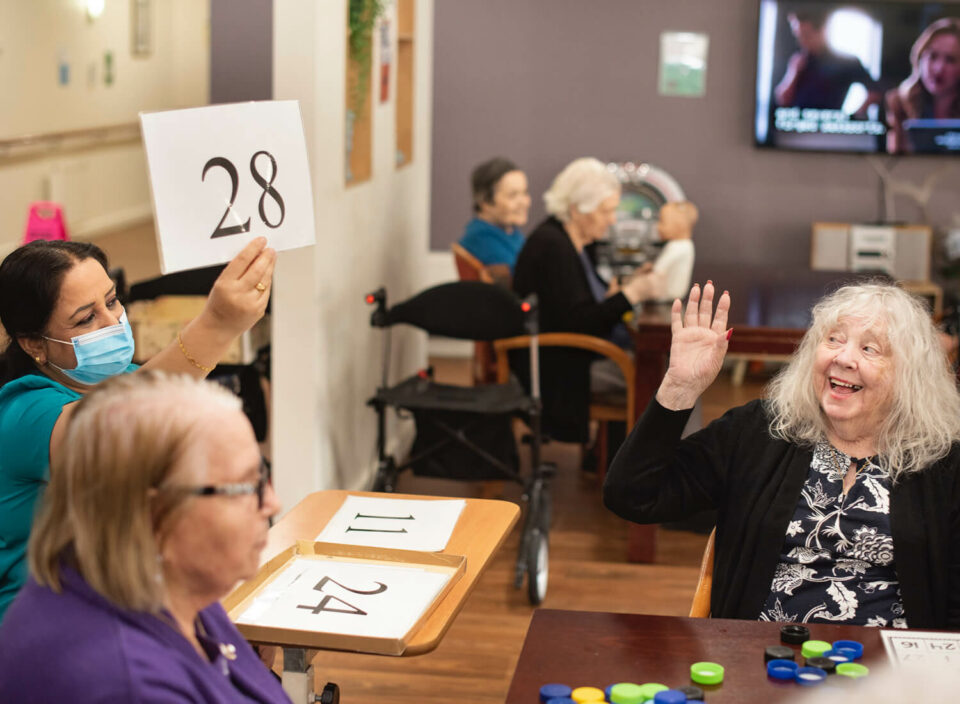
Discover a vibrant range of lifestyle activities at our aged care homes. From fitness classes to arts and crafts, our curated programs cater to diverse interests. Engage in yoga, dance, gardening, painting and many more activities fostering social connections and enhancing well-being.

Book a tour at one of our Hope Aged Care homes

Brunswick

Do you want to receive news and events updates?(Required)

Gladstone Park

Do you want to receive news and events updates?(Required)

Sunshine

Do you want to receive news and events updates?(Required)

Swan Hill

Do you want to receive news and events updates?(Required)

Frequently asked questions

More questions? Please get in touch with our friendly team.
No

We encourage families to bring favoured furniture items so that the room is familiar and similar to their room at home. For more tips on making the transition smoother, check out our article on transitioning to aged care.

To prepare for your move to Hope Aged Care, we’ll start with the resident agreement, which covers all the important details. Having your documents ready will help make the process smooth. We also personalise care to suit each resident’s needs, making sure their new home feels comfortable. For more tips, visit our article on new beginnings in aged care.

In conjunction with the medical requirements the dietary needs are determined and these are then reviewed by our qualified dietitian.

Yes. To learn more about our clinical care coordinators and service managers, please visit our Clinical Care page.

Our homes are staffed 24 hours by registered trained nurses. In an emergency or medical crisis, the medical condition is assessed and a decision is then made as to the appropriate care. The resident is stabilised and if emergency hospital care is required the appropriate emergency services are contacted and the resident transferred to the most appropriate emergency facility.

Residents are encouraged to keep their own health professionals. Where the resident does not have their own regular GP or the GP does not make home visits, we have a number of visiting GP’s who are able to take over the medical care of the resident.

Yes, we completed the Sunshine renovations in August 2024. The upgrades include the lobby and reception area, 14 resident rooms, courtyards and garden areas, as well as the management rooms.

You can check the photos and read about the renovation here.

Yes, we regularly have aged care jobs available and publish aged care career opportunities on our Careers page. You can explore them here. We also feature a collection of testimonials from both team members and residents, which are linked on this page as well.

Latest news
at Hope

Entry into Hope Aged Care Homes

If you’re starting to consider residential aged care for your Mum, Dad or loved one you’re probably wondering how much it will cost – and if they can afford it.

The Australian Government’s New Aged Care Act came into effect from 1 November
2025. The reforms include changes to the costs of permanent residential aged
care. These costs apply to every aged care community across Australia.

The following costs apply to those entering residential aged care after 1 November
2025. If you were approved for, or accessing, a Home Care Package on 12
September 2024, you are protected by the ‘no worse off principle’ and will pay
fees under the 1 July 2014 arrangements. 


Fees and contributions you may pay

Before you enter permanent residential care, you should have your means assessed to see if you’re eligible for Australian Government assistance with fees and accommodation costs. The fees you pay will depend on the outcome of your means assessment and what you agree on with your aged care provider.  You may need to pay some or all of these fees:

• basic daily fee

• hotelling contribution

• non-clinical care contribution

• accommodation costs


Basic daily fee

All residents pay this fee for daily living services, including meals, cleaning, laundry and utilities.

The maximum fee is set at 85% of the single basic age pension. This fee increases in March and September each year in line with the age pension.

Hotelling contribution

People who can afford to will contribute more towards their daily living costs through a hotelling contribution.

Services Australia will tell you if you need to pay a hotelling contribution and if so, how much you need to pay. This is based on your means assessment and changes with indexation in March and September. 

Non-clinical care contribution

People who need to pay the maximum hotelling contribution may also need to pay a non-clinical care contribution.

Services Australia will tell you if you need to pay a non-clinical care contribution and if so, how much you need to pay. This is based on your means assessment. The maximum amount changes with indexation in March and September. Daily and lifetime caps apply.

This fee ceases after a person pays it for four years, even if they have not reached the lifetime cap amount


Accommodation costs

Room prices

How much you pay for a room at your chosen aged care facility will also depend on your means assessment.

If you are eligible for assistance, the government will pay some or all of your accommodation costs to your provider. If not, you will need to pay the price that you agree with your provider.

Payment options

  • Option 1: 

A lump sum refundable accommodation deposit (RAD) that is refunded when you leave care, less any retention amounts and any fees that you agree to draw down.


A refundable accommodation deposit (RAD) retention also applies – if you pay a lump sum, your provider keeps 2% of your lump sum per year. This amount is not refunded when you leave care. After 5 years in care, no further retention amounts will be deducted.

  • Option 2: 

A daily accommodation payment (DAP) that is not refunded when you leave care.

The interest rate used to calculate a DAP is called the Maximum Permissible Interest Rate (MPIR). This is set by the Government and reviewed quarterly.

Daily accommodation payment (DAP) indexing applies – if you pay by DAP, this amount will increase due to indexation on 1 January, 1 April, 1 July and 1 October each year. Indexation does not apply to daily accommodation contributions (DAC) paid by residents eligible for government assistance with their accommodation costs.

  • Option 3: 

Any combination of a RAD and DAP.

Until you pay a RAD, you will pay a DAP. You can pay a RAD at any time after you enter care.

A RAD payment is considered an asset for aged care purposes. This means it is counted in your means assessment and may affect your hotelling contribution and non-clinical care contribution.

If you choose a combination payment, you can choose to draw your daily payment from your paid RAD. Over time, this will increase your daily payment unless you top up the lump sum. Your provider may also agree to draw other fees from the lump sum, like your basic daily fee.


Confirm your fees with a means assessment

To confirm your aged care fees, you will need a means assessment. This is where Services Australia or the Department of Veterans’ Affairs (DVA) assesses your income and assets. If you are a member of a couple, they will assess half of your combined income and assets, regardless of who earns the income or owns the assets.

If you choose not to have your means assessed, you will not be eligible for assistance with your accommodation and your provider can ask you to pay:

• the full hotelling contribution and non-clinical care contribution, and

• the accommodation price you agreed on before you entered care.


To complete a means assessment, fill in the Residential Aged Care Calculation of your cost of care form (SA457) or the Residential Aged Care Property details for Services Australia and DVA customers form (SA485). If Services Australia or DVA already have your financial details, you may not need to complete a form to have your means assessed.


Once your assessment is complete, Services Australia will send you a fee advice letter.


You should lodge your request for a means assessment as early as possible – even before you enter an aged care home. If your assessment is finished before you enter, the results are valid for 120 days unless there is a significant change in your circumstances.


Changes to fees after entering care

Your aged care fees and contributions do not stay the same for your time in care. They will change over time because of:

• changes to your financial circumstances

• indexation of aged care fees and thresholds

• reaching lifetime caps on certain fees.


Keep your financial details up to date

Once you’ve had your means assessed, you need to keep your income and assets up to date with Services Australia or DVA. You are legally required to report changes to your (and your partner’s) personal or financial circumstances within 28 days. This will help keep your aged care fees correct.

You can call Services Australia on 1800 227 475 or update your details online through MyGov.


Department of Veterans’ Affairs (DVA) recipients

If you are an eligible former Prisoner of War (POW) or Victoria Cross (VC) recipient, DVA may pay your basic daily fee. You may also be exempt from paying some of the contributions based on your means assessment.

You can find more information at dva.gov.au


Seek financial advice and education

You should seek independent financial advice before deciding how to pay for aged care. Some payment methods can affect your pension and aged care fees. If both you and your partner need to access care, each of your payment methods may affect the other’s aged care fees.


Financial hardship assistance

If you can’t afford your aged care fees for reasons beyond your control, you can apply for financial hardship assistance. You must meet certain eligibility criteria and will be assessed on your specific circumstances. If you’re approved for hardship assistance, the government will pay some (or all) of your aged care fees.


Got Questions?

We understand that residential aged care costs can be confusing. That’s why our knowledgeable and friendly team is here to help you. We’ll guide you through the options, answer your questions and help you at every stage.

Call us on (03) 9302 9300 or email us at [email protected]

Schedule of fees and charges for residential care
from 20 March 2026


This Schedule applies to residential aged care recipients. Different fees and accommodation costs apply based on the resident’s fee arrangements and accommodation arrangements.

Rates for 1 November 2025 fee and accommodation arrangements

Resident fees and contributions

Fee

Maximum daily rate

Basic daily fee 1

$66.80

Hotelling contribution 2

$22.15

Non-clinical care contribution 2

$107.32

This fee applies for permanent residential care and residential respite care.

Services Australia advises the contribution amount for a resident.

Caps on non-clinical care contribution

Non-clinical care contribution cap

Rate

Daily cap

$107.32

Lifetime cap 3

$137,917.01

A four-year cap also applies to the non-clinical care contribution. The fee ceases after a person pays it for four years, even if they have not reached the lifetime cap amount. 


Rates for post 1 July 2014 fee and accommodation arrangements

Resident fees and contributions

Fee

Maximum daily rate

Basic daily fee

$66.80

Means tested care fee 5

from 1 October 2025

from 1 April 2026

$403.80

$370.39

Services Australia advises the fee amount for each resident.


Caps on Means tested care fee

Means tested care fee caps

Rate

Lifetime cap

$86,185.23

Annual cap

$35,910.43